Knife Review Klein Tools Chicago Usa 3 Blade Electricians Knife
There are many different types of knives on the marketplace for almost whatever need. From hunting to preparing nutrient to ceremonial purposes, you can find a pocketknife or other blade to suit your needs.
When we hash out types of pocketknife blades, we are by and large referring to the shape and style of the blade. The blade shape tin have a huge bear upon on the purpose you need the pocketknife for. That'southward why information technology'south important to know your knives then you can choose the correct one.
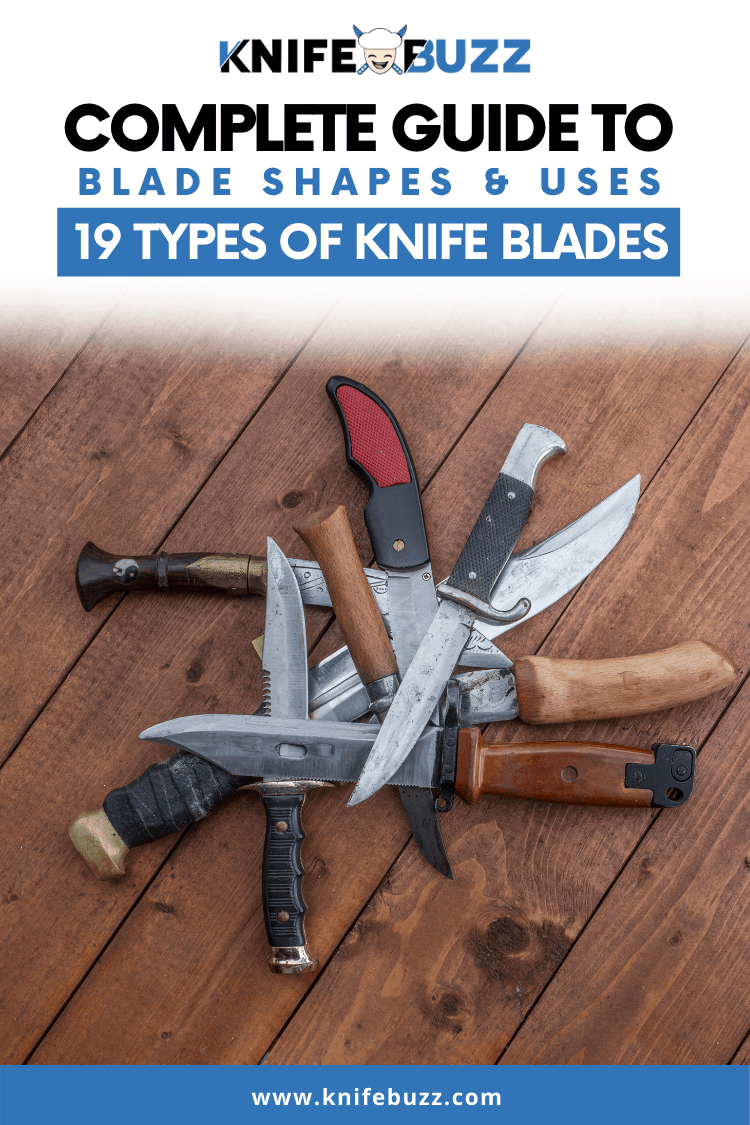
Types of Pocketknife Bract Shapes
There are dozens upon dozens of variations out there, but these are some of the most popular types of pocketknife blades.
Clip Signal

The clip point pocketknife blade shape features a curved border on both sides and a thin tip. This blazon of blade takes a portion out of the back, which creates a second curved border and a thinner tip. It can be used for minor or hard-to-reach places. The clipped edge on the back of the pocketknife is unremarkably concave, but can as well be straight. This type of knife offers more than control, but may non perform well for more heavy-duty tasks. The clip point is a popular self defense knife.
Pros:
- The curved edges on both sides of the blade offer versatility and control.
- The thin, abrupt point is perfect for small places, hard-to-reach places, and piercing.
- The part of the spine that is non "clipped out" is flat and unsharpened, allowing you to apply force for more controlled cutting.
Cons:
- The pocketknife is not meant for more heavy-duty tasks, such every bit chopping and cutting thick materials.
- If using the unsharpened office of the spine to exert strength, y'all volition demand to be careful, and so you don't accidentally cutting yourself on the sharpened "clipped" border.
Tanto Signal
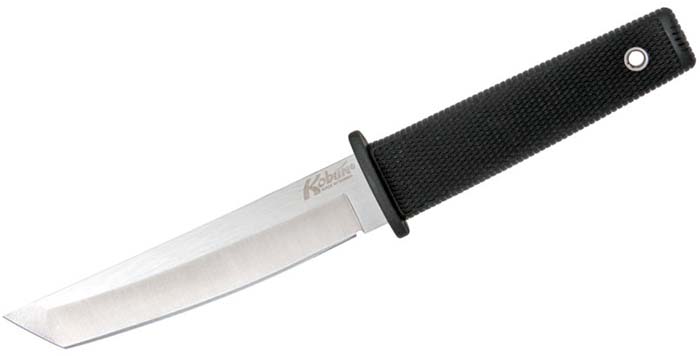
The tanto point pocketknife blade shape features a chisel edge. It is inspired by Japanese swords – specifically, the tip of a broken samurai sword which was said to exist able to penetrate anything, including armor. It is a popular style for modernistic tactical knives. The tanto signal knife has no abdomen, so it will not be able to slice, merely it makes up for that in tip forcefulness.
Pros:
- The strongest feature of the tanto bespeak knife is its tip, which is very strong and able to pierce virtually annihilation.
Cons:
- The knife is not recommended for slicing or chopping, considering it has no belly to it.
Abaft Indicate

The abaft bespeak knife blade shape features a long curved edge on both sides, which curves up into a thin indicate. Information technology is mostly used for skinning and filet knives. The curved edges ameliorate the pocketknife's ability to slice and skin, and make the bract lightweight. The drawback is that the back of the knife is sharp, and so you cannot use your fingers to apply pressure level to the dorsum of the blade to increase force.
Pros:
- The long curved edge is perfect for skinning and slicing.
- The sparse indicate is sharp enough for piercing.
- The blade is very lightweight, making it easy to use.
- The double-edged nature of the knife improves versatility.
Cons:
- The back of the knife is sharpened, then you cannot apply force with your paw without cutting yourself.
Straight Back
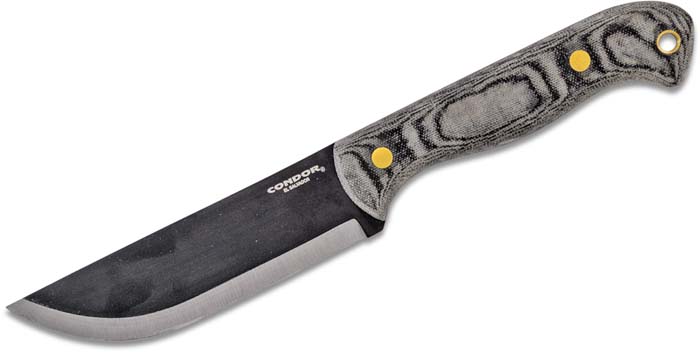
The straight back knife blade shape features a curved edge and a flat, dull side. It is generally used for slicing and chopping. The dull back of the blade allows y'all to safely apply pressure with your mitt or fingers, increasing the cutting forcefulness. The drawback of this dull side is that it adds weight to the knife, making it heavier to hold and utilise.
Pros:
- The curved edge allows for effective slicing and chopping.
- The spine of the knife is deadening and flat, allowing you to utilise pressure safely while chopping.
Cons:
- The sturdy irksome side of the knife adds extra weight. This makes the pocketknife heavier.
Wharncliffe
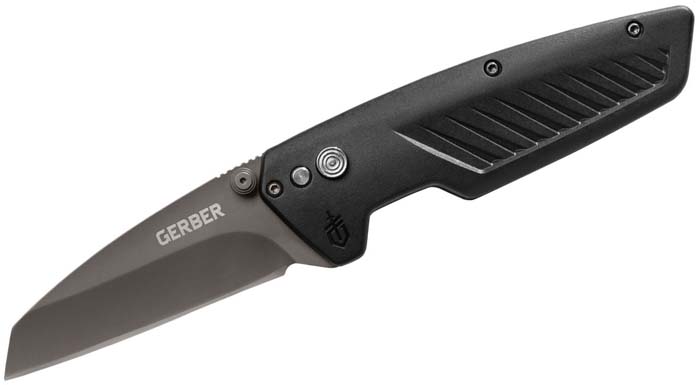
The wharncliffe knife blade shape features a thick bract, a straight edge, and a slow back with a gradual curve. Similar to the sheepsfoot blade, the back of the knife curves down, but information technology has a gentler curve, rather than a sudden curve at the terminate.
This blade shape was originally used by sailors, since it's easier to employ in unstable conditions on the sea. It's still used today for slicing. The dull back makes information technology easy and condom to use and control, and the thick blade gives the knife strength. The lack of a sharp bespeak protects you from accidental punctures, though it too eliminates the power to pierce or penetrate.
Pros:
- The thick blade lends strength and stability.
- The slow spine allows you lot to use pressure for actress force and control.
- The straight cut edge is very effective for slicing.
- The edge is strong enough to handle lite chopping as well, owing to the thickness of the blade.
- The point of the knife is not precipitous, so you will not accidentally cut yourself.
Cons:
- The curved spine of the pocketknife is more difficult to apply strength to than a straight spine.
- The point of the knife cannot pierce or stab.
Pen
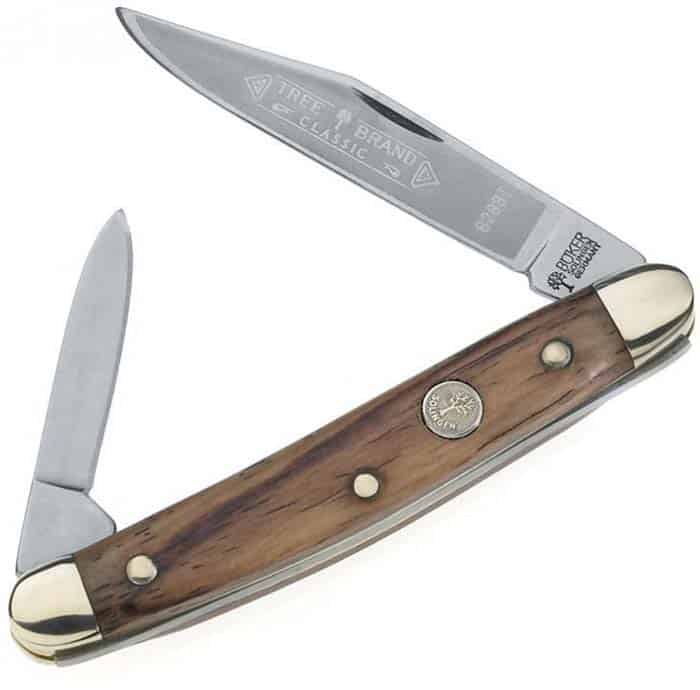
The pen knife blade shape features a symmetrical bend on both sides of a center spine, similar to a spear betoken blade. Withal, unlike a spear point, it's only sharpened on 1 side. It may also characteristic a more gradual curve. It is used for minor folding pocketknives. The principal benefit of a pen knife is its modest size. A Swiss Army pocketknife is the most popular example of a pen pocketknife.
Pros:
- The center spine offers an bonny symmetry.
- Though both sides are curved, only ane is sharpened. This leaves a slow back for exerting force and control.
- Pen knives are versatile and compact, which is why they are used for many small folding pocketknives, such every bit Swiss Army knives.
Cons:
- While it is suited for almost everyday tasks, the pen pocketknife is not recommended for more heavy-duty tasks, such every bit chopping and piercing.
Drop Signal
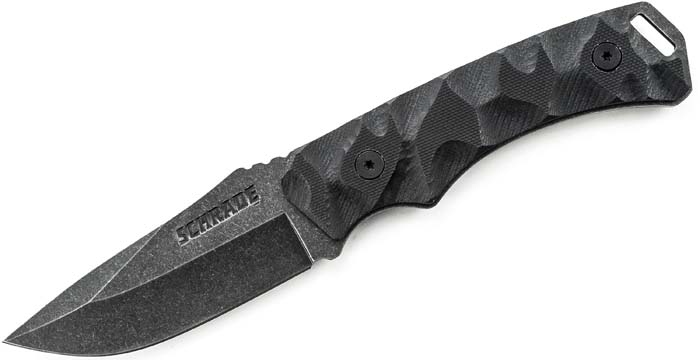
The drop betoken knife blade shape features a slight curve and a convex curve on the back of the knife. Information technology is used for virtually pocketknives since the shape of the blade tin be applied to many different applications. This type of bract provides extra strength but is not meant for piercing. The driblet bespeak is by far the nigh popular blade shape today, thanks to its versatility.
Pros:
- The curved edge is perfect for slicing and cut.
- The knife is versatile, making information technology a great option for pocketknives.
- The drop point blade is double-edged, allowing you to use either side for any chore.
- Drop points are normally very strong.
Cons:
- In that location is no tiresome spine, and then y'all would not exist able to use your fingers or hand to use forcefulness.
Spear Signal
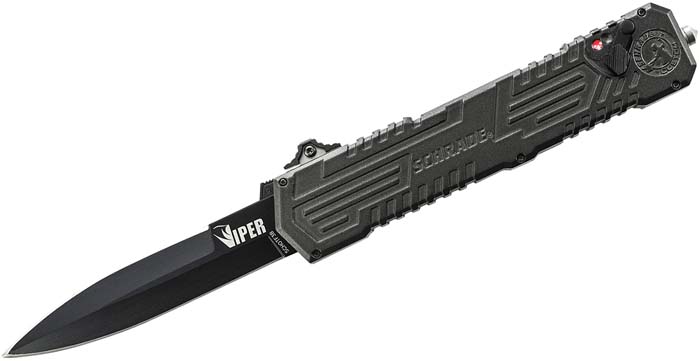
The spear point knife blade shape features a symmetrical curve on both sides of a heart spine. Information technology is used for daggers and small knives that are used for thrusting and throwing. The bract is typically sharpened on both sides, making it an excellent self defense blade shape.
Pros:
- The center spine provides symmetry.
- The double-edged nature of the knife gives it an extra sharpness.
- It is peculiarly designed for daggers.
- Great for self defence force
Cons:
- The knife would non be useful for slicing or chopping.
- At that place is no boring spine on the pocketknife, so you lot cannot safely utilize pressure level or exert control.
Hawkbill
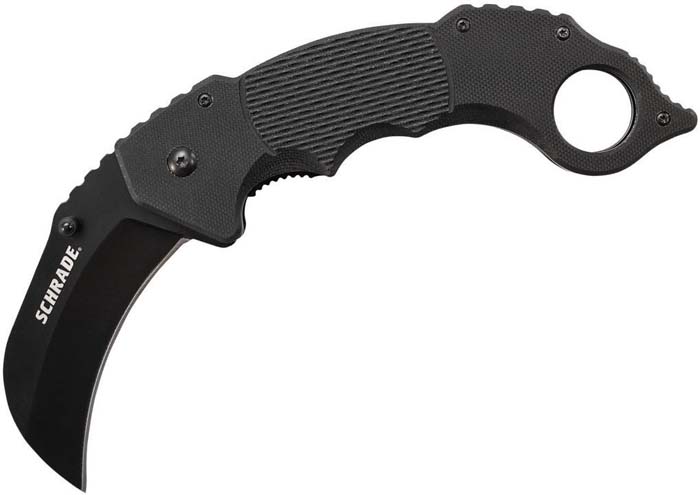
The hawkbill knife blade shape features a curved cutting edge and a by and large straight dull back. The spine curves straight down at the end, in the same direction as the abrupt border. This creates a sharp point that faces downward. Information technology is used for tasks in which you would pull the knife back in the direction of the handle, such as cut carpet or pruning plants. The abrupt point and edge make the knife very useful for cutting and piercing, while the dull back allows you to handle it safely and apply pressure level for more forcefulness and control.
Pros:
- The point is very sharp for piercing and grabbing materials to exist cutting.
- The curved border can cutting materials such equally carpet and linoleum.
- The dull spine allows you lot to utilize force and increase control over the pocketknife.
Cons:
- The knife must exist used in a specific manner.
- The knife is specially designed for certain tasks. Information technology may be sick-equipped to handle other types of tasks.
Sheepsfoot
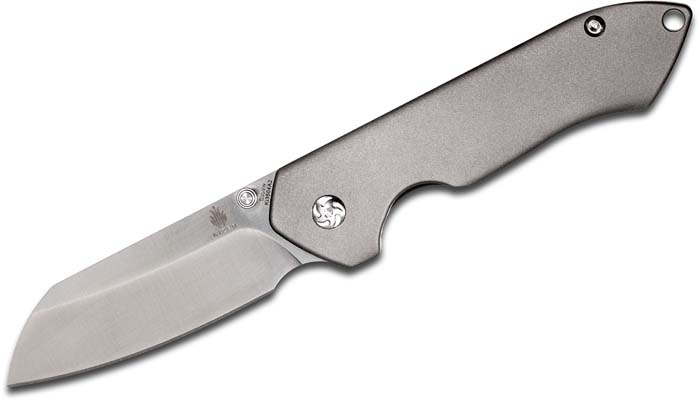
The sheepsfoot knife blade shape features a sharp cut edge and ho-hum back. Both the border and back are directly, with the back curving downward at the finish. It was originally used for trimming sheep hooves, and is likewise used for chopping. The dull back allows you to use your fingers to increase cut force and command. The lack of a precipitous point means the pocketknife cannot be used for piercing, but this could besides exist a benefit since the down curve could hands cut you accidentally if combined with a abrupt point.
Pros:
- The straight edge is effective for chopping and uncomplicated slicing.
- The spine is dull, and so you can safely apply forcefulness.
- The downward curve does non end in a sharp betoken, which increases prophylactic.
Cons:
- In that location is no sharp signal, so piercing and stabbing would be very hard.
- There is no curved edge for more complex slicing and cut.
Needle Point
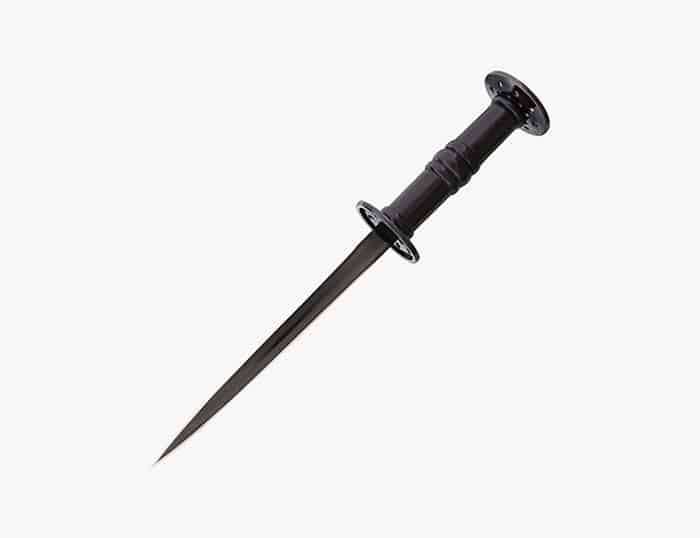
The needle betoken knife blade shape features a symmetrical edge on both sides, which tapers sharply to a point. Information technology is used for daggers that are meant for shut range combat and throwing. It'due south fantabulous for piercing, but it is not especially strong.
Pros:
- The blade is double-edged for extra versatility and efficiency.
- The blade shape'southward signal is very sharp for piercing and stabbing.
Cons:
- The blade is not as strong equally other types of knives.
Spey
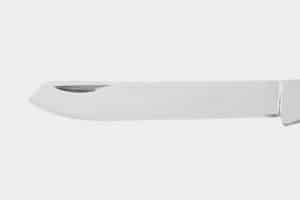
The spey knife blade shape features a straight border that curves upwardly at the end, a small clip on the back, and a very slight point. It is used for skinning and speying animals. The combination of straight edge and small bend make the knife very effective at skinning different kinds of animals. Nonetheless, the lack of a sharp point means the knife cannot exist used for piercing anything.
Pros:
- The straight border, curved stop, and clipped back make the pocketknife versatile and able to peel various types of animals.
Cons:
- Because of the clip on the dorsum, you'll demand to be careful if you press fingers on the dorsum to utilise strength.
- The betoken is not sharp enough for piercing or stabbing.
Dao
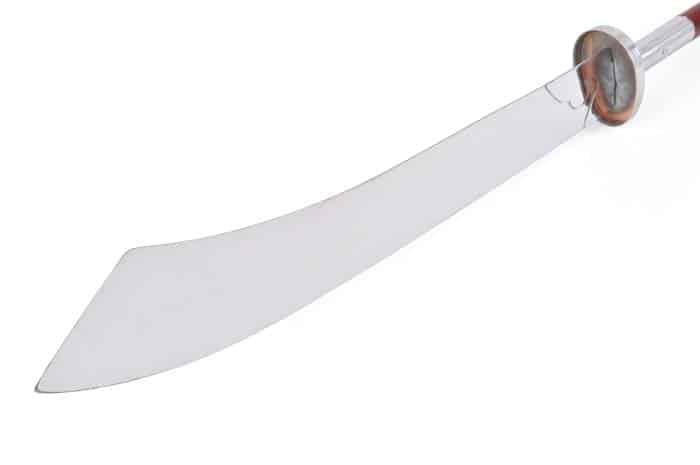
The dao knife blade shape features a single sharpened edge and a straight spine. It is a variation of the dao sword, which is a traditional Chinese single-edged sword. It is used more often than not for slashing and chopping. In martial arts and military purposes, the term "dao" refers to the sword rather than the pocketknife. Dao knives often take the form of cleavers used to chop foods in the kitchen. The single curved edge chops finer and the slow, straight spine improves safety.
Pros:
- Dao knives are intended to be very high-quality, due to their traditional forging processes.
- This blade shape makes smashing kitchen cleavers.
- Martial arts and ceremonial blades too do good from a dao style, though these blades are typically swords rather than knives.
- Dao cleavers can chop most foods very efficiently.
- The dull spine is straight and allows yous to apply pressure for more force during chopping.
Cons:
- While dao knives are fantabulous for chopping, they are not recommended for slicing, cutting, or other types of tasks.
Talon
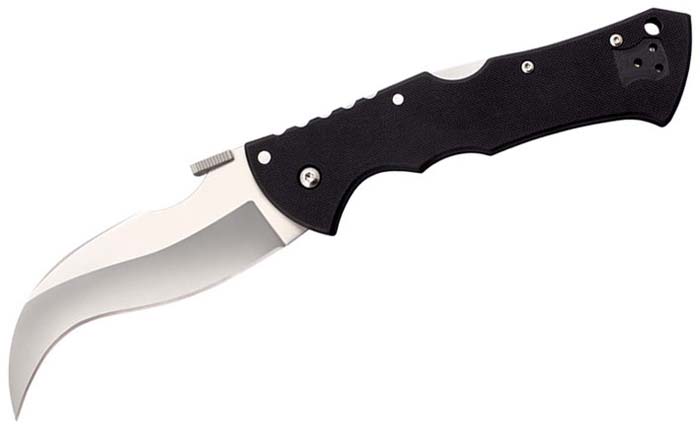
The talon knife blade shape is very similar to the hawkbill knife blade. However, instead of a square-looking dorsum that curves down steeply at the end, the curve is more than gradual, giving the blade a shorter, talon-like appearance (hence the name). Information technology is used in much the aforementioned manner every bit a hawkbill blade, by pulling the bract back for cutting materials such as carpet and linoleum. The sharp indicate is skillful for piercing, the precipitous edge cuts efficiently, and the ho-hum dorsum protects your fingers from cuts when applying pressure.
Pros:
- The curved style of the knife is attractive but useful.
- The blade can cutting carpet and linoleum, likewise as clip vegetation for efficient landscaping.
- The abrupt bespeak pierces and stabs easily, enabling you to pierce and "take hold of" the material to exist cut.
- Tough or thick materials may demand more strength. The boring spine allows y'all to press downwards with fingers or your other hand to reach the needed force.
Cons:
- The knife must be used in a specific style, past pulling back towards the handle. Any other use makes it ineffective.
- The pocketknife is non suited for other types of tasks.
Gut Hook
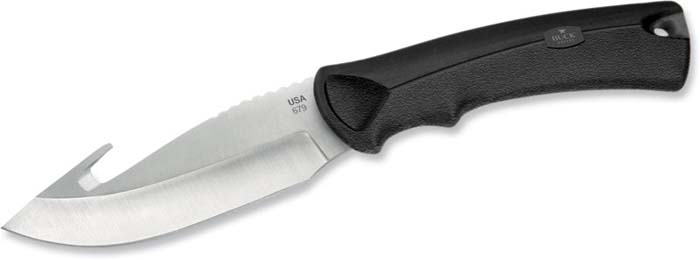
A gut hook is more of an individual feature than a type of knife blade shape in itself. A gut claw pocketknife blade is any blade that features a hook on the back of the bract. This small sharpened hook appears out of the spine most the end of the blade. Information technology's used for field dressing game while hunting, and is designed for the easy skinning of an animal without dissentious any meat.
Pros:
- Gut hooks brand nifty additions to hunting knives.
- The gut hook feature allows you to skin an animal without losing whatsoever of the meat.
Cons:
- Hunters should be careful not to accidentally cut themselves on the sharp gut hook protruding from the spine of the knife.
Harpoon Blade
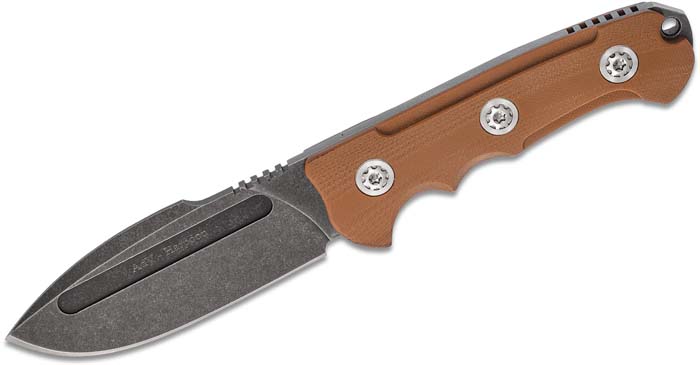
The harpoon blade features a abrupt border and dull spine. The spine features an up ramp on it. All harpoon blades have the upward ramp on the dorsum, but aside from that, there are many variations in advent. Some are pointed like a spear or feature straight or curved edges.
Usually, the abdomen remains straight, with a gentle curve appearing in the top third of the blade. The harpoon knife blade shape is by and large used for cutting tasks. The ramp on the spine offers extra stability and safety, offering the ability to apply force per unit area for increased cutting forcefulness.
Pros:
- The upwardly ramp on the spine allows you to apply pressure to increase force while cutting. Information technology as well improves safety when using the pocketknife.
- The ramp adds stability to the knife.
- There are many variations in the design and appearance of the blade shape, which allows you to detect a pocketknife that suits your specific needs.
Cons:
- Harpoon blades are great for cutting, simply may not suit other types of tasks.
Leaf
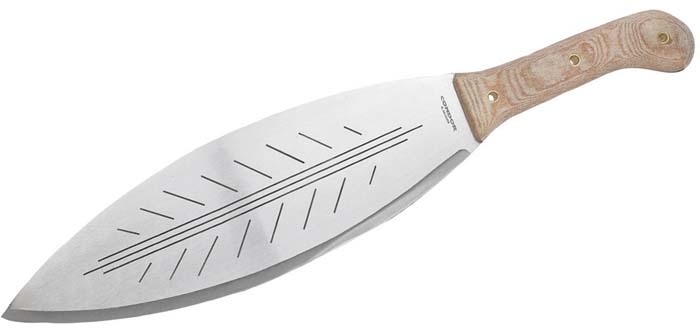
The foliage pocketknife bract shape features a sharp edge that curves upward and a dull spine that slopes downwardly to meet information technology. It also normally has a big hole at the terminate of the spine nearest the handle, used as a thumb hole for piece of cake deployment.
A thumb ramp over the thumb hole features grip jimping, which allows you to concur the knife easily. It's considered an all-purpose knife blade that is splendid for pocketknives. The benefits of this type of pocketknife are the sharp signal, like shooting fish in a barrel grip and deployment, and small compact size. Even so, the fine betoken can chip and break after regular use.
Pros:
- The thumb hole allows you to bring out and utilise the knife easily.
- The thumb ramp allows you lot to grip the knife deeply and safely.
- The pocketknife is versatile and can serve many unlike purposes.
- The sharp point makes it piece of cake to pierce and puncture.
- The small size makes information technology easy to comport effectually.
Cons:
- The point is sharp, only very fine, which makes it susceptible to chips and other damage after regular apply.
Serrated

The serrated pocketknife bract shape features a sharpened edge with notches, usually called teeth, that make information technology splendid for cut. This type of pocketknife is normally single-edged. Information technology is used for kitchen knives, some pocketknives, and any other knife that will be used primarily for slicing and cutting.
Serrated blades are more hard to sharpen than smooth blades, but they stay sharper longer because at that place is less contact surface area. They cut faster than shine edges, but the cut is not as clean or precise.
Pros:
- Serrated knives are designed specifically for slicing and cutting.
- They stay sharper longer than other knives that are straight-edged.
- They cut faster than smooth edges.
Cons:
- They are more hard to acuminate than shine blades.
- Cuts are not as clean or precise every bit those made with smooth edges.
Blunt Tip

The blunt tip knife bract shape features a rounded tip, hence the name. This blunt or rounded tip prevents accidental cuts and improves safety in situations when you don't want to puncture objects. For this reason, information technology is typically used for dive knives. The blunt tip prevents punctures in important equipment while underwater.
Some may accept a single straight or serrated border, merely the best dive knives are double-edged, with both a direct and serrated edge. This allows them to slice and cut with minimal effort. At that place may as well be a notch for cutting fishing line. The edgeless tip could be used for digging and chiseling. If y'all need to pierce or stab anything, though, this knife will do you no skilful.
Pros:
- The blunt tip keeps you from puncturing equipment or cutting yourself.
- The blunt tip can also exist used for digging and chiseling.
- Edgeless tip knives may include both a straight edge and serrated edge for different types of tasks.
Cons:
- The knife will non assist with any piercing or stabbing piece of work.
Decision
When you're looking for a knife to suit your needs, it'south of import to go to know the unlike types of pocketknife blades and blade shapes and acquire what each type tin can do for you. This will assistance you lot brand the right determination.
Clip betoken knives are best for specialized tasks that require precision, while driblet point blade shapes are the near versatile knives. For piercing, puncturing, and stabbing, the best blade shapes are tanto point blades, spear point blades, and needle signal blades.
Trailing betoken blades, spey blades, and blades with gut hooks are useful during hunting. Slicing tasks are best served by straight dorsum blades, wharncliffe blades, and serrated blades, while chopping can be accomplished with straight back blades, sheepsfoot blades, and dao cleavers.
Pen knives, drib point blades, leafage blades, and occasionally serrated blades are used for pocketknives. Hawkbill and talon knife blade shapes are used for specialty knives that are specifically designed for tasks such every bit cutting carpet and other materials, as well equally pruning plants. Blunt tip blades are likewise specialty blades, used specially for dive knives.
Whatever your need, there is a knife bract shape that tin can serve it best.
Source: https://www.knifebuzz.com/knife-blade-shapes/
0 Response to "Knife Review Klein Tools Chicago Usa 3 Blade Electricians Knife"
Post a Comment